
Design Your Space: Customizing All Amish Garden Shed Sizes

Elevating Your Storage from Basic to Beautiful
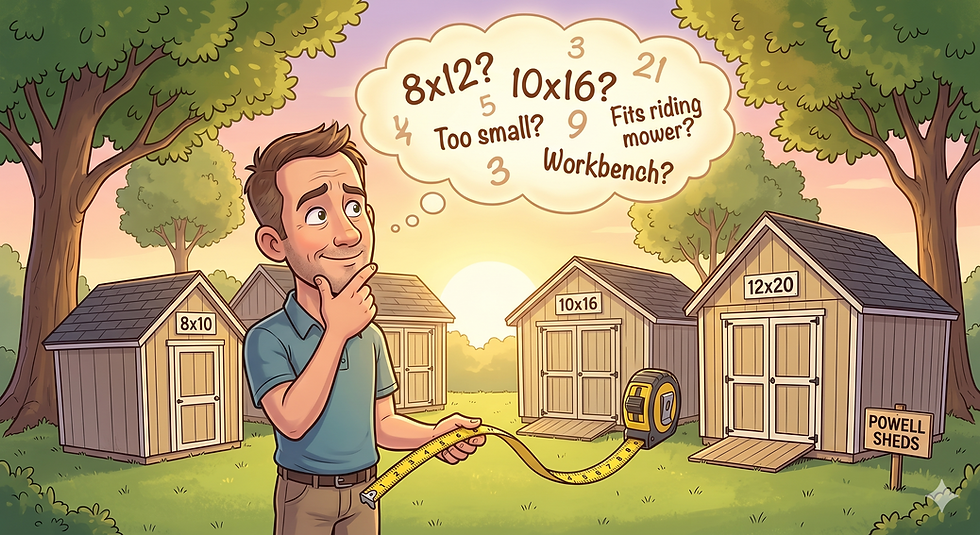
When most people begin the journey of adding a new outbuilding to their property, the initial focus is purely logistical. You measure your yard, take inventory of your lawn equipment, and spend a significant amount of time comparing various Amish garden shed sizes to ensure you select a footprint that can handle your current and future storage needs. However, once the foundational math is complete and the tape measure is put away, the truly exciting phase of the project begins: the customization.
An outbuilding no longer has to be a dark, generic box hidden away in the back corner of your property. Because these structures are built by skilled Amish craftsmen rather than stamped out on a factory assembly line, you have complete control over the final aesthetic and utility of the building. You are not just buying a shed; you are designing a highly functional extension of your home.
Whether you are looking to create a seamless architectural match to your primary residence, a rustic focal point for your landscaping, or a highly specialized workshop, the details matter. From selecting the perfect paint colors to upgrading the doors for maximum utility, here is an in-depth guide to customizing your new structure so it perfectly serves your property for decades to come.
The Philosophy of Customization: Utility Meets Aesthetics
Before diving into specific trim colors or window placements, it is important to establish your primary goal for the building. A shed designed to be a backyard potting station will require a vastly different set of customizations than a shed designed to store a heavy-duty zero-turn mower and power tools.
If you have already read our guide on why Amish-built structures outlast kits, you know that the structural integrity of these buildings is unmatched. The heavy-duty floor joists, premium siding, and superior framing are standard. Customization is about taking that bulletproof foundation and tailoring it to your exact daily workflow.
It is a delicate balance between utility (how the shed works) and aesthetics (how the shed looks). You want doors wide enough to accommodate your largest equipment, but you also want the exterior to elevate your property value and comply with any neighborhood homeowner's association guidelines. By systematically walking through the exterior features, access points, and architectural accents, you can easily achieve both.
Exterior Harmony: Matching Your Home’s Architecture
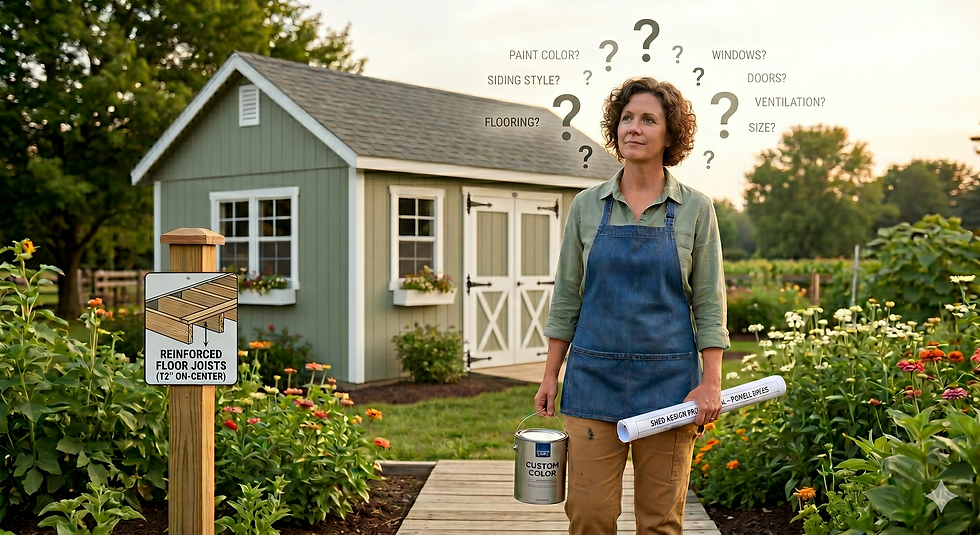
The most common request we receive from property owners is the desire to make their new shed look like it was built at the exact same time as their house. Achieving this level of exterior harmony comes down to three main components: siding style, paint color, and trim.
Most standard outbuildings default to our high quality LP ProStruct Smart Siding which is a 3/8" thick Wood Painted Siding. You also have the option to choose our premium 29 Gauge Steel Ribbed Metal Siding. Both are great options and comes down to the aesthetic you are looking to achieve.
The color palette is where the customization truly brings the building to life. You do not have to settle for the standard "barn red" or "utility gray." We have so many Amazing colors you can choose from provided by: Haley Paint. If you need something very specific to exactly match an existing paint, we recommend taking a small physical sample of your home's siding or trim to a professional paint center. Utilizing resources like the Sherwin-Williams color matching tools allows you to perfectly replicate the exact shade of your home's primary exterior and contrasting trim.
By applying your home's exact body color to the shed's siding, and your home's trim color to the shed's fascia, window frames, and corner boards, the structure immediately stops looking like a storage unit and starts looking like a premium, custom-built guest cottage.
Roofing: The Capstone of Your Structure
The roof of your shed accounts for nearly half of its visible exterior, making it a massive aesthetic factor. When selecting your roof, you generally have two main choices that will dictate the look and longevity of the building: dimensional architectural shingles or ribbed metal roofing.
If your goal is to match your house, dimensional shingles are usually the best choice. You can select a shingle color and texture that seamlessly blends with your home's existing roofline. On the other hand, if you want the shed to stand out as an independent, rustic feature in your garden, a metal roof with a contrasting color—such as a deep forest green or a classic matte black—can provide an incredible visual pop.
Beyond the materials, the pitch (or steepness) of the roof plays a major role in the overall feel of the structure. A standard, low-pitch gable roof is highly functional, but upgrading to a steeper pitch, an A-frame style, or a classic barn-style gambrel roof dramatically changes the silhouette of the building. Regardless of which of the many Amish garden shed sizes you select, upgrading the roof pitch instantly adds vertical volume and architectural interest.
Window Placement: Balancing Light, Ventilation, and Security
Windows are often treated as an afterthought in shed design, but their strategic placement is critical for both the utility of the interior workspace and the exterior charm of the building.
From a utility standpoint, natural light is essential. If you are using the space as a workshop, a potting shed, or simply want to be able to find your tools without wiring the building for electricity, you need adequate sunlight. Furthermore, cross-ventilation is vital. Storing gasoline-powered equipment, fertilizers, and damp garden hoses can lead to noxious fumes and damaging humidity. Placing operable windows on opposite walls allows for a natural cross-breeze to keep the interior climate controlled.
When choosing window placements, consider the experts' advice on structure and weatherproofing. According to Bob Vila's guides on outbuilding construction, properly flashed and installed windows not only bring in light but are crucial for preventing long-term water damage around the frames.
If security is a primary concern, or if you simply want to maximize your interior wall space for hanging pegboards and shelving, consider transom windows. These are long, narrow windows installed high up on the wall, just below the roofline. They flood the space with natural light while keeping your valuable equipment out of the direct line of sight from the yard, and they leave your lower walls completely free for tool storage.
Door Upgrades: The Most Critical Functional Choice
You can design the most beautiful building in the neighborhood, but if you cannot easily get your equipment in and out of it, the shed has failed its primary purpose. The doors are the critical choke point of your entire storage strategy.
When you were reviewing how to choose the perfect size for your yard, you likely measured the footprint of your lawn tractor or ATV. Now, you must ensure your doors can handle that width. Standard single doors are fine for push mowers and wheelbarrows, but for larger equipment, upgrading to heavy-duty double doors is an absolute necessity.
For maximum utility, consider the placement of those doors. Placing double doors on the gable end (the short side) of the shed allows you to pull a large piece of equipment straight in. However, placing them on the eave side (the long side) can sometimes offer better access if the shed is positioned tightly against a fence line.
Additionally, consider the approach. A heavy-duty, reinforced diamond-plate threshold and a custom-built ramp are essential upgrades if you are rolling heavy machinery in and out on a weekly basis. This prevents the lip of the shed floor from chipping and ensures a smooth, safe transition from the yard to the interior.
Architectural/Structural Accents: Shutters, Flooring, and Ventilation
The final layer of customization is where the structure truly gains its personality. The architectural accents are the small details that elevate the building from a simple utility structure to a beautiful piece of backyard architecture.
Shutters and Window Boxes: Adding slatted or panel shutters that match your home's trim color instantly softens the look of the shed. Installing custom flower boxes beneath the windows allows you to integrate the building directly into your landscaping, creating a seamless transition between the garden and the structure.
Structural Flooring for Heavy Machinery: While reviewing various Amish garden shed sizes, it is easy to focus entirely on the square footage, but the strength of the floor beneath that space is equally crucial. If your goal is to store heavy-duty equipment like a zero-turn mower, an ATV, or cast-iron woodworking tools, upgrading the sub-structure is a vital investment. By reinforcing the foundation with a 12-inch on-center floor joist layout and selecting a heavy-duty or fully treated floor upgrade, you create an industrial-strength base. This structural enhancement ensures the decking will never bow or sag under immense, concentrated weight, keeping your equipment secure and your floor level for decades.
Advanced Climate Control and Ventilation: Protecting your investments requires more than just a locked door; it requires actively managing the interior environment. Storing gasoline-powered engines, damp garden hoses, and chemical fertilizers in a completely sealed space can lead to noxious fumes, trapped humidity, and rust. Upgrading the building's natural airflow is a necessary functional choice. By installing a continuous ridge vent along the peak of the roof and pairing it with a set of louvered gable vents, you create a passive, highly efficient circulation system. This constantly pulls fresh air through the space and exhausts hot, stagnant air, keeping your tools dry and making the shed a far more comfortable workspace during the sweltering summer months.
Maximizing the Interior: Leveraging Vertical Space
While the exterior customizations dictate how the shed looks to the neighborhood, the interior customizations dictate how it works for you. The footprint on the ground is only half of the storage equation; the other half is how effectively you use the vertical space.
Because these structures feature incredibly strong, heavy-duty wall studs and roof trusses, they are designed to hold serious weight. Adding built-in, heavy-duty workbenches provides a dedicated space for repairs and potting without sacrificing your floor space.
More importantly, integrating overhead loft spaces at the gable ends of the roof transforms the utility of the building. Lofts are the perfect, out-of-the-way storage solution for seasonal items like holiday decorations, patio cushions, and winter snow gear. By moving these rarely used items up into the rafters, you keep the main floor entirely clear for the equipment you use every single day.
Bringing Your Vision to Life
Customizing your outbuilding is an investment in both your property value and your daily peace of mind. By taking the time to carefully select your siding, match your paint, upgrade your access points, and add thoughtful architectural/structural details, you are creating a space that you will genuinely enjoy walking up to every day.
You no longer have to settle for the limitations of a big-box store kit. Whether you are maximizing the smallest footprint for a tight city lot or designing a massive, multi-door workshop for a sprawling property, the ability to customize every inch ensures that your new structure is built exactly for the way you live.
Order Your Custom Amish Garden Shed Today!

Comments